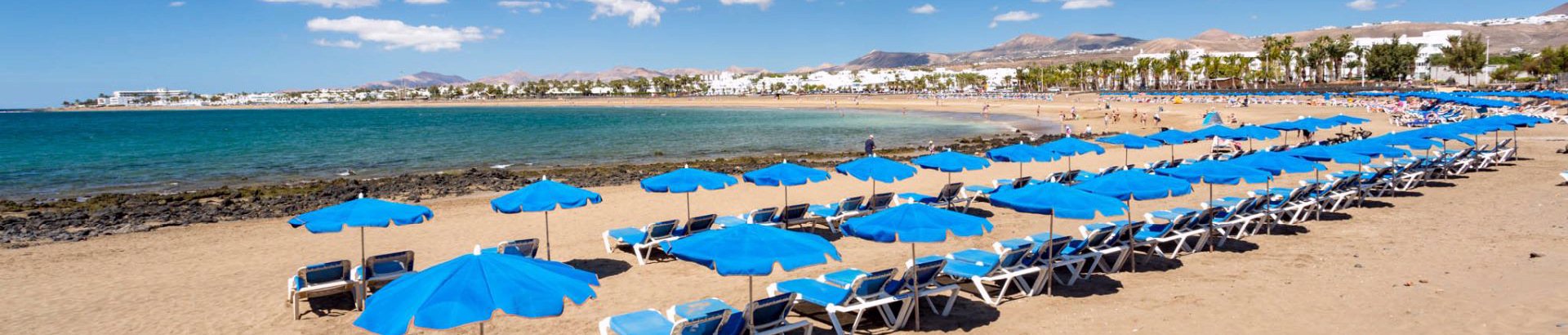
This area of the east coast of Lanzarote, south of Arrecife, is widely
recognised as having some of the largest beaches on the island.
As we move south from the airport, the beach at Playa de Matagorda has however,
been described on more than one occasion as being a plane spotters paradise, and
is certainly not the place to spend a quiet relaxing day.
At one point the airport runway lights actually extend through the beach area
and into the sea, and it is not uncommon for aircraft to pass as low as 300ft
above sunbathers at this point, on their final approach before landing.
In all fairness to Playa de Matagorda, the beach does actually stretch for some
1,200 metres further south of the airport, and its mixture of sand and small
volcanic stones have been awarded the prestigious European Blue Flag for its
facilities, cleanliness, and water quality.
As we mentioned briefly on our general introduction pages, development funds
from the European Union have in recent years been used to create a wide traffic
free promenade connecting the beach at Playa de Matagorda to Playa de los
Pocillos some 3km away to the south.
The beach at Playa de los Pocillos also has the internationally recognised Blue
Flag, and is of a similar size to Playa de Matagorda, however, due to its
popularity with both families and water sports enthusiasts, it can however
become quite crowded particularly at weekends.
The third beach in the area is known as Playa Grande and this is Puerto del
Carmen's main beach. Again despite it size at over 1,000 metres, it does become
quite crowded at weekends due to the sheer numbers of both tourist and locals
alike who wish to take advantage of its facilities.
This beach was once known locally as La Tinosa, which translates into English as
"The Stained One", in recognition of the volcanic nature of its sands. However,
for purely commercial reasons it was felt that "The Stained One" somehow lacked
appeal, and hence the subsequent name change.
 Home
Home